
Looming Leicas: Leica’s Latest Introductions Slated for 2026 & Beyond!
How good are the predictions of the rumor mill? Here are our thoughts.
By Jason Schneider
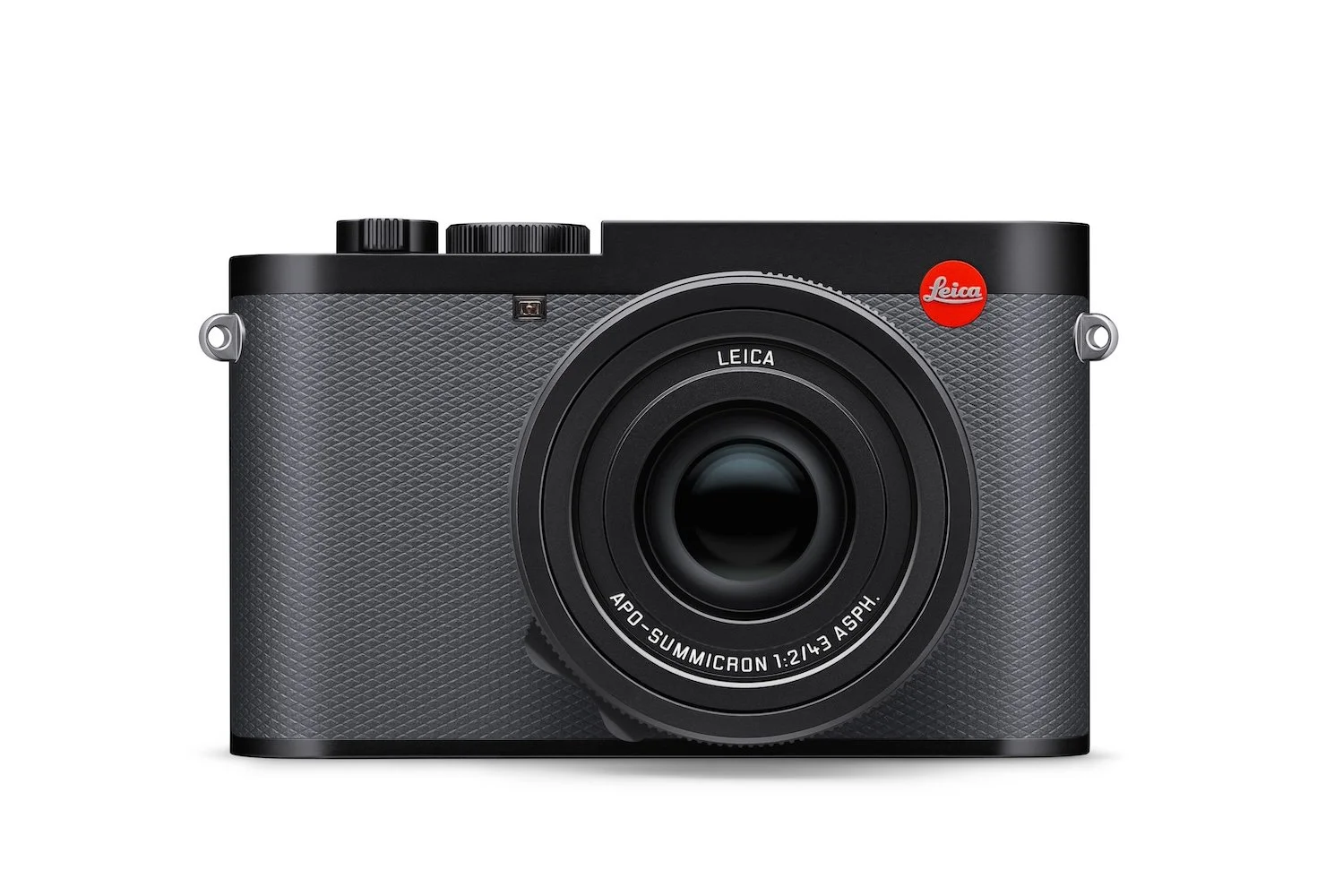
According to rampant rumors, pervasive insinuations, and sweeping scuttlebutt posted on the internet or attributed “The Great AI,” there are at least three new Leicas coming down the pike by the end of this year or perhaps sometime in 2027. These include the Leica S4, a mirrorless medium format successor to the formidable, recently discontinued medium format Leica S3 DSLR, a significantly upgraded Leica M12 that’s reportedly slightly smaller than the current Leica M11, and a Leica Q4 with a new, higher-res (70-100MP?) sensor and possibly 8K video capability. Of course, none of these speculations has been confirmed or denied by Leica Camera AG, so all the following comments are based on the author’s personal opinions fortified by off-the-record observations made by independent Leica experts.
Leica S4: A medium-format mirrorless successor to the Leica S3 DSLR
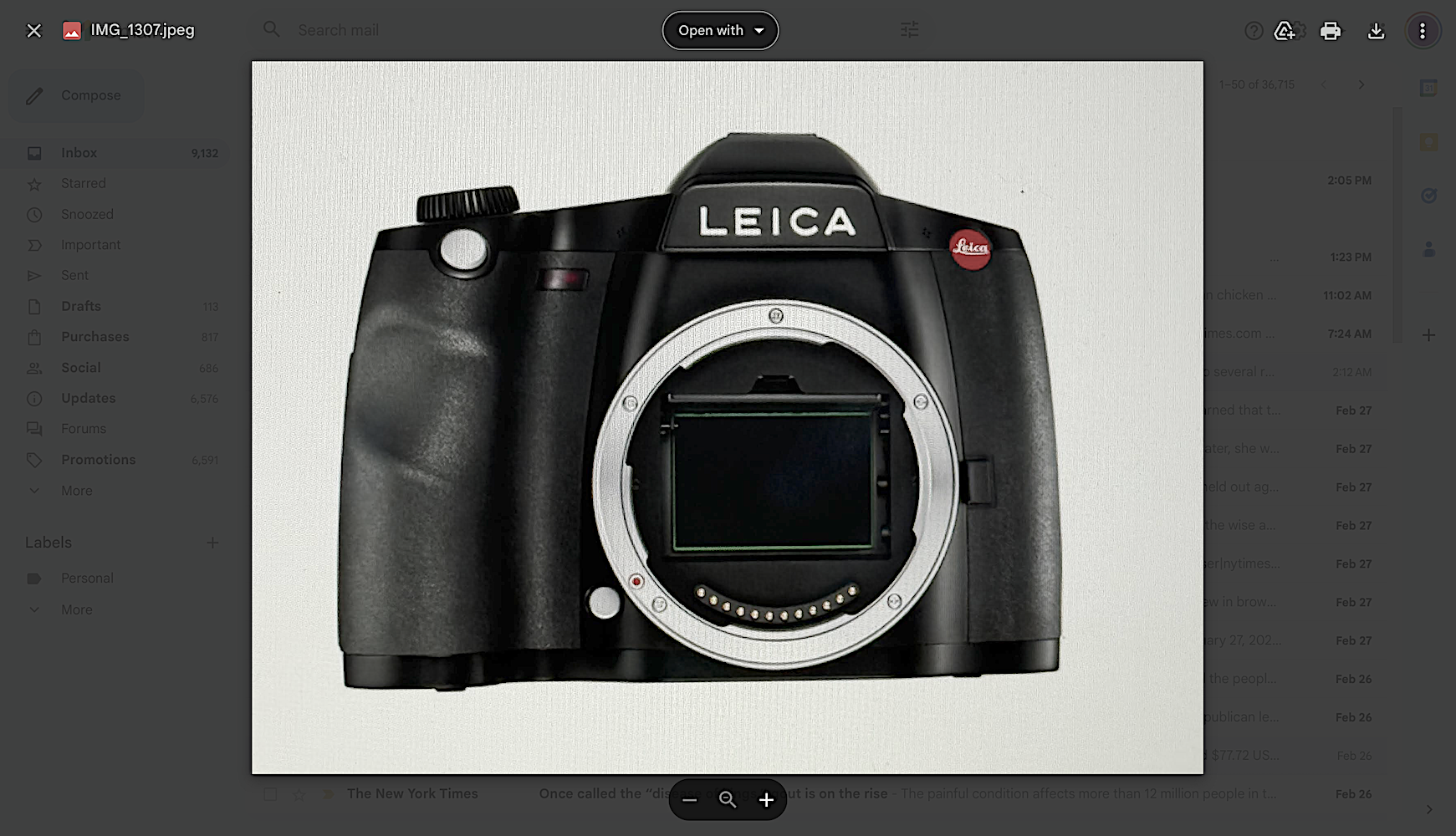
The Leica S3, a hefty DSLR with a 64MP Proformat (30 x 45mm) BSI CMOS sensor, and introduced in 2020 has been phased out, along with its superb line of S-mount lenses, paving the way for a mirrorless successor, currently dubbed the Leica S4. The Leica SL3, a full frame (24 x 36mm) 60MP mirrorless camera remains in production (at $7,485.00 body only), and the forthcoming Leica S4 has been described as a seamless combination of these two concepts. It is noteworthy that neither the sensor size, sensor specs, nor the lens mount of a Leica S4 have been finalized, but there is widespread consensus that it will be a medium-format mirrorless camera with a lens mount other than an S-mount, and that adapters will be offered so users will be able to mount and use virtually any Leica-mount lens.
The rumored Leica S4 is expected to be medium-format (approximately 44 x 33mm or 30 x 45mm), with a Leica-developed 100MP+ BSI CMOS sensor, advanced phase-detect autofocus with subject tracking, and 8K video capabilities. Other rumored features: Built-in sensor-shift (IBIS) image stabilization, 15-16-stop dynamic range, a new, more advanced-dot OLED EVF plus an articulating touchscreen, a new Maestro 4 image processor, Advanced Phase Detection Autofocus (PDAF) with AI-driven subject recognition (of people, vehicles, and animals), 8K video recording, 4K/60p, 10-bit log, and improved codecs, a likely ISO range of (possibly extendable to higher ISOs), Dual CFexpress card slots, internal storage (approximately 512 GB) and a USP-C port. Continuous burst speed: 5 to 9 frames per sec.
What will the Leica S4 look like? Probably like a mirrorless camera with a few DSLR styling cues, but whatever its final shape it will be significantly smaller and lighter than the magnificent but ponderous Leica S3, and it will be housed in a rugged, weather-sealed magnesium alloy body. Estimated price: $10 to $12K, body only, all things considered a reasonable guess considering the feature set and the high cost of development.
More Thoughts on the Leica S4 Based of Conversations with Experts
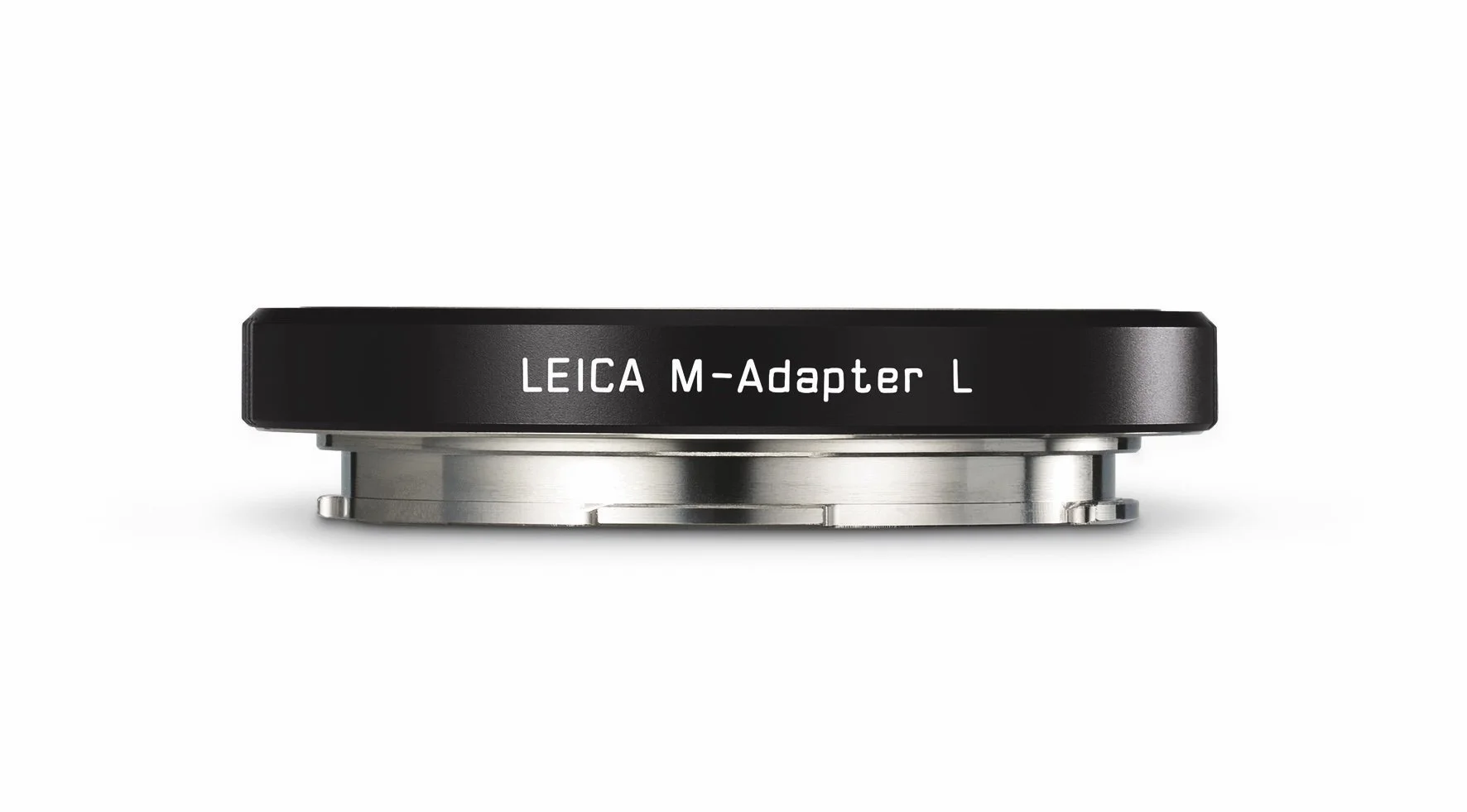
What lens mount will the Leica S4 use? Here are some alternatives to the S-mount: A modified S-mount, larger than an L-mount, but more compact than the present S-mount. Perhaps a modified L-mount, thinner to provide the correct lens flange-to-image plane distance. Whatever mount is used, Leica will surely provide a series of adapters so S4 owners will be able use S-mount and virtually any present or previous Leica lens on the camera, though possibly with some restrictions re coverage with older lenses (e.g. M-mount). This will allow Leica to market the new camera to the widest potential audience, helping to broaden its appeal.
Though it is unlikely that a medium format Leica S4 will provide faster autofocus than, say, a full-frame SL3-S, due to the larger size and weight of the glass elements that must be moved, the S4 is expected to provide faster and more decisive AF than the S3 thanks to upgrades in its AF system. Another crucial advantage is the ability to match the file size to subject, and the camera’s ability to offer a choice of file sizes (say 100MP, 60 MP, and 37MP) to suit the specific applications is likely to be a big plus. The fact that the S4’s sensor is likely to deliver unsurpassed color accuracy and that S4 sensors may be individually color calibrated at the factory are also potentially strong selling points. The core elements that will make the Leica S4 so desirable are the size and quality of its sensor, accurate and vibrant color out of the box, an impressive dynamic range, malleability of the file system, supreme optical flexibility (the ability to work with virtually any Leica mount lens) and the numerous technical upgrades already mentioned. We’re sure that the Leica S4 (whatever its final name) will be executed with Leica’s signature attention to detail, and we hope it includes all the amazing features mentioned above. Because if it does it will be the camera that not only that takes medium format digital photography to the next level but also reinforces Leica’s image as a world leader in photographic innovation, an exalted position it has held for over a century .




The Leica M12: More (and maybe less) of a Great Thing.
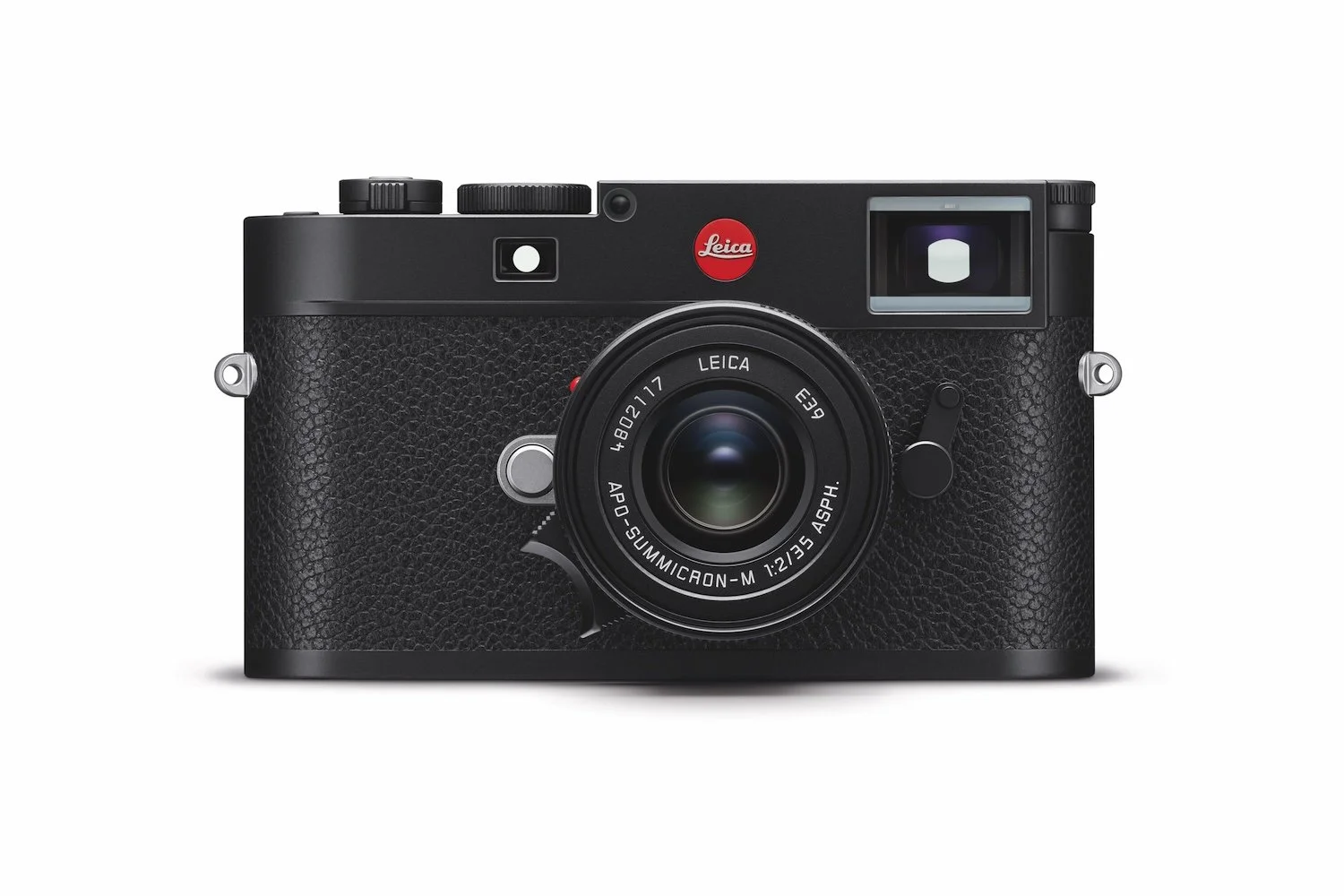
According to “The Great AI” (which scrapes the net for just about anything) the long-rumored Leica M12 will potentially arrive later this year at a body-only price of about $10,000. If the rumors are to be believed, it would feature a 60–70MP BSI CMOS sensor in a body that’s approximately 3mm (1/8-inch) smaller than the M11’s, though which dimension isn’t specified. A lot of things you (or AI) will find on the internet are inconsistent, and all, of course, are unverified, including the above. We certainly have no inside information. So, we will try to be a bit more logical and “extend the curve” to predict what an M12 might be.
If you look at where the M11 feature set is, where technology has gone, and what at least some consumers have said they want, you can construct some possible spec for an M12:-A 3.9-inch hi-res touchscreen, with or without control buttons; increased internal storage; an improved sensor with high dynamic range (ISO 50 to ISO 102,400) and improved low light performance; greater use of computing power for things like highlight preservation, perspective control, etc.; improved battery life; and in camera image stabilization (IBIS). Leica is always working to improve its superb optical rangefinder so there’s that too. Whether it is this feature set or some variant, you can bet that Leica will build us an M12 that, as always, combines advanced technology with respect for its historical roots. It all sounds great (and fun) to us and it’s gratifying that there’s surely still plenty of life left in the timeless Leica M concept that debuted 72 years ago.
It has often been said that Leica, like many great German companies maketh haste slowly, but cameras like the Leica S4, M12 and Q4 prove that Leica has not only picked up the pace but is also stepping briskly and confidently into a brighter-than-ever future.